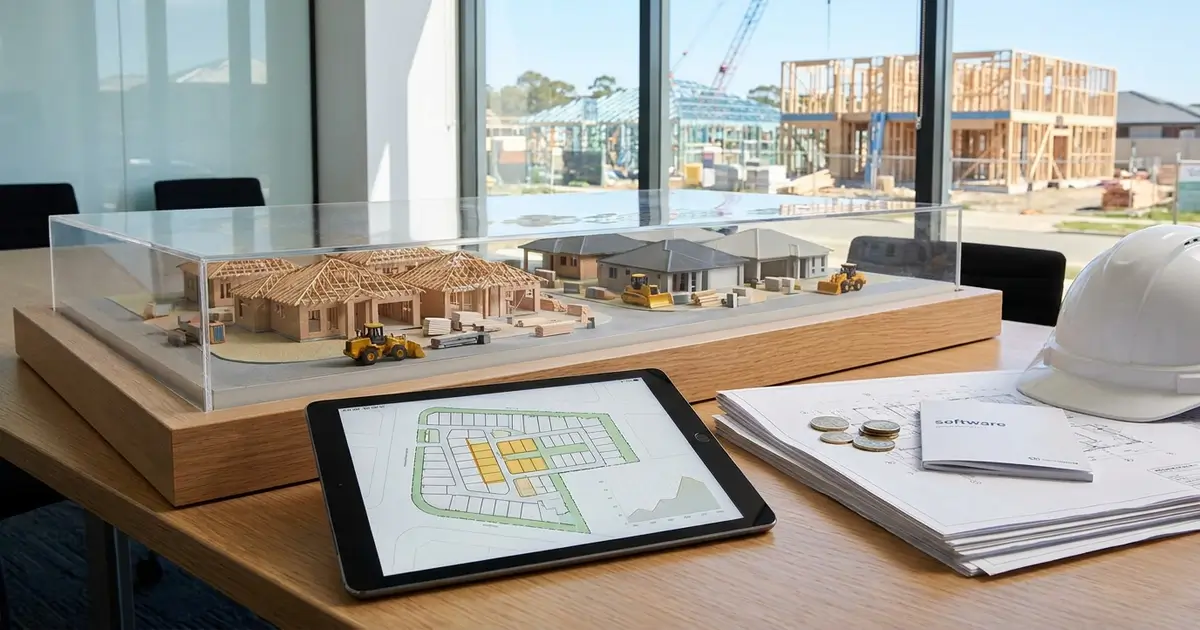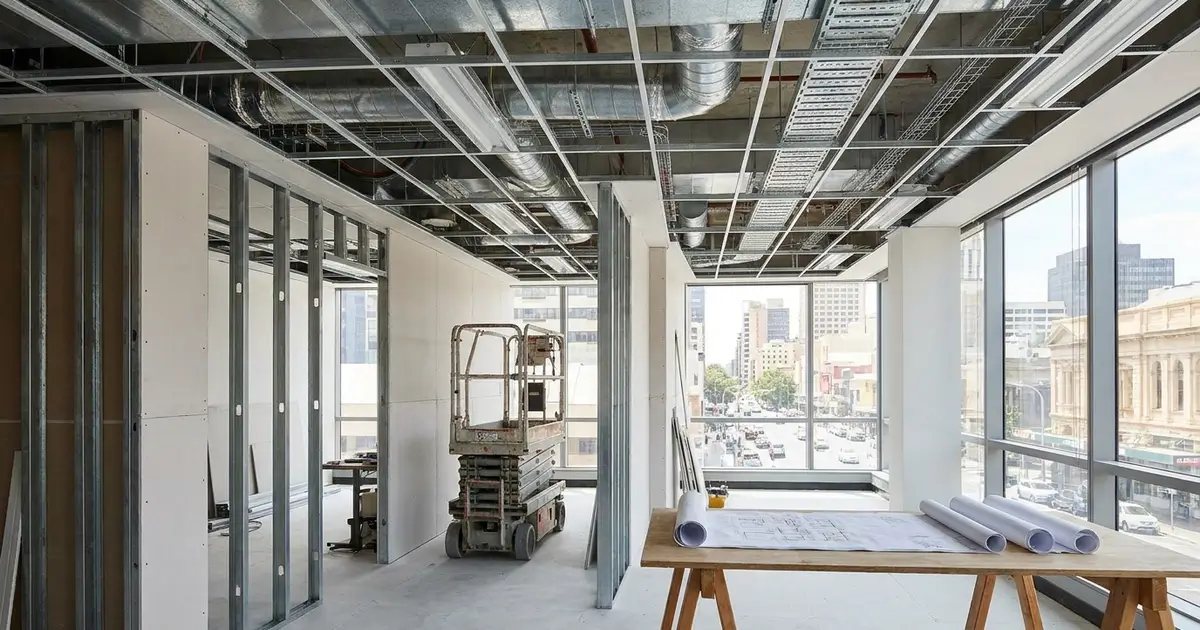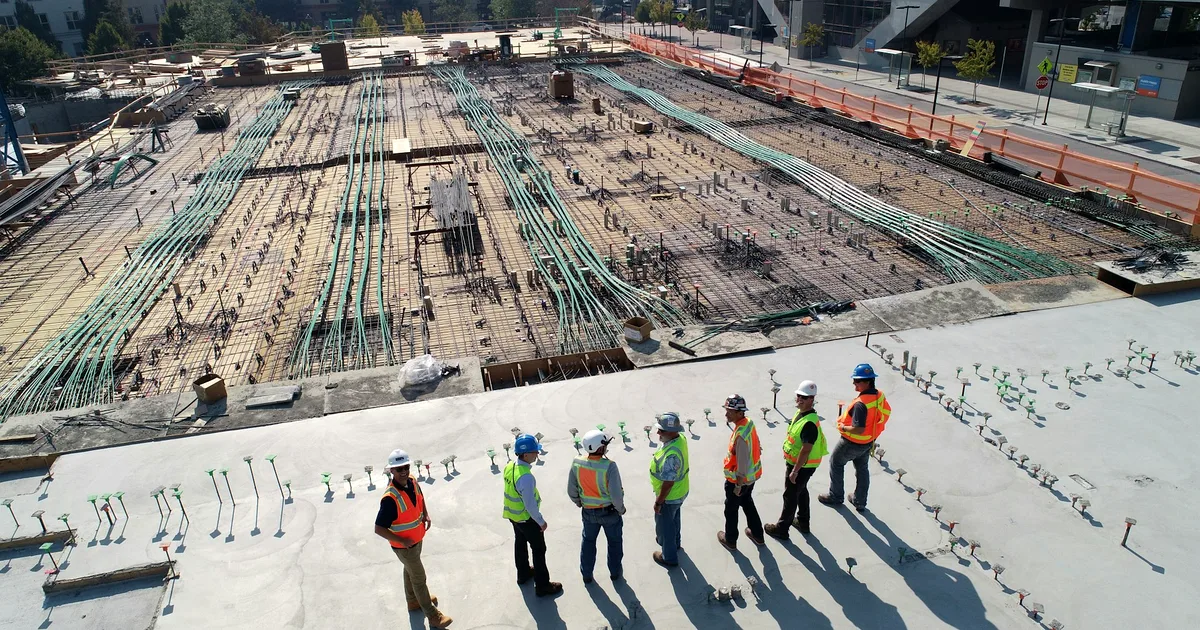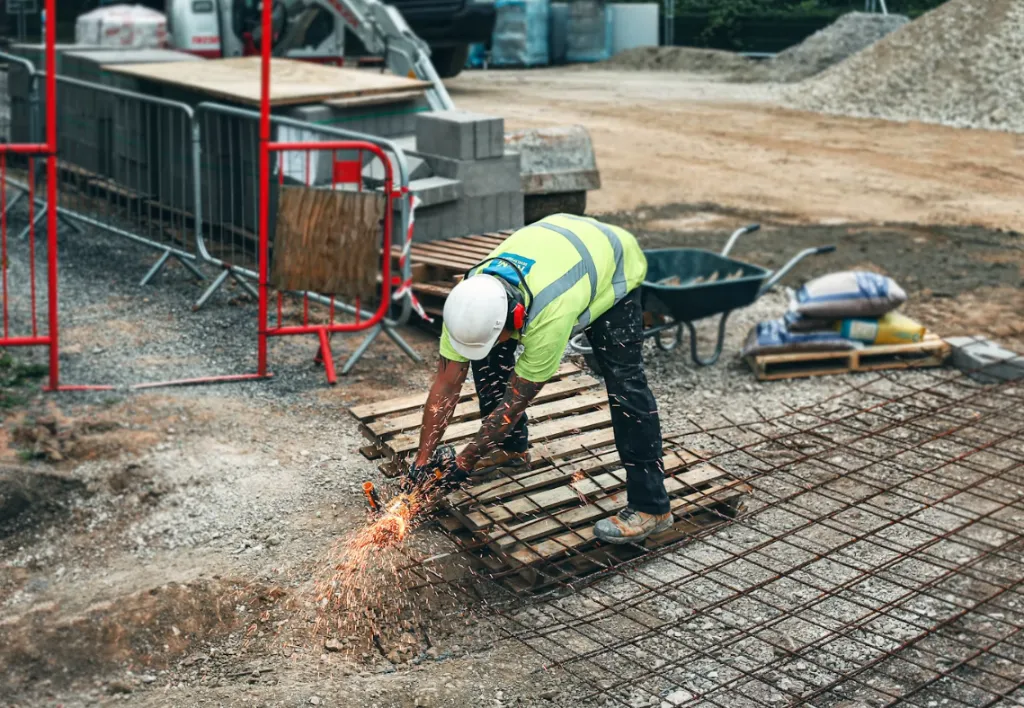

Electrician Looking for Builder Work in Adelaide: How to Win Repeat Electrical Packages
A practical guide for Adelaide electrical contractors who want rough-in-to-fit-off builder packages instead of paying portals for service-call leads.
Practical notes on construction procurement, trade quoting and project delivery across Adelaide and South Australia, plus DDDI research partnerships and industry events.
A practical guide for Adelaide electrical contractors who want rough-in-to-fit-off builder packages instead of paying portals for service-call leads.
A practical guide for Adelaide footing and concreting crews who want a steady pipeline of builder work without paying for leads.
A practical guide for Adelaide AAC panel and lightweight cladding crews who want repeat builder packages as infill construction shifts to panel systems.
A practical guide for Adelaide plumbing and gas contractors who want rough-in-to-fit-off builder packages instead of competing for maintenance leads.
A practical guide for Adelaide retaining wall crews who want engineered wall packages from builders and developers instead of one-off backyard jobs.
A practical guide for Adelaide roofing crews — tile, metal and re-roof — who want a steady pipeline of builder packages without buying leads.
There is no published market rate: providers sell five different products at five different prices, and only two of those models publish numbers you can check.
A house bill of quantities measures one dwelling trade by trade, in build order, using the unit each trade buys in. Here is what each section contains and which lines go missing.
A checkable bill of quantities format has nine columns, sections that follow the build sequence, and one rule per line: one unit, one source, and allowances flagged rather than blended in.
Three pricing bases hand the quantity number to three different people. Who carries the risk under a BOQ, a schedule of rates and a lump sum, and how that shapes trade quotes.
A bill of quantities lists every measured item of work, trade by trade. It fixes scope, not price, and most new-home BOQs in Australia are not prepared to the national standard.
A quantity surveyor report is any cost document a quantity surveyor prepares. Which one you need depends on who commissions it: your budget, your lender, or your tax return.
A take-off service sells measured quantities, not a price. What you get, what it costs, and the checks that decide whether the file is worth paying for.
A take-off measures, a bill of quantities describes and unitises, an estimate prices, and a bill of materials is the buying list. Here is where each one starts and stops.
A quantity surveyor plans, measures and controls construction cost from feasibility to final account. What the role covers, and what a home builder actually buys.
A quantity surveyor usually prepares a bill of quantities for the client. A builder's estimator and a take-off service produce them too, and each can sign something different.
The person who assesses your building application and issues the approval holds the same statutory function everywhere in Australia, under at least six different titles. Here is what each title means, how to verify the registration behind it, and what to settle before you sign.
A building permit application is an evidence pack, not a form. Here is what belongs in it, who prepares each document, and what triggers an information request.
A building permit application is the construction-stage approval for the work on your drawings, assessed against the building rules not the planning rules. How it runs by state.
A permit is not one charge but four: lodgement, assessment, a statutory levy and the inspections around them. Here is who sets each, how GST applies, and why quotes differ.
There is no national building permit search. Records sit with the council or permit authority that issued them, keyed on lot and plan rather than the street address. Here is how to find them in each state, and what a record does and does not prove.
South Australia issues building consent, not a building permit, inside a development approval lodged through PlanSA. How the pathway runs and who assesses it.
Victoria issues building permits through a relevant building surveyor you appoint, not council or the regulator — the sequence, the levy arithmetic and the closing certificate.
Three tests decide whether your project needs a building permit, and only one of them is about size. Here is how the exemption test actually works, who issues the approval in each state, and why the seven-year question has three separate answers.
Statutory assessment periods by state, the pauses the law allows, and why the permit decision on paper is rarely the date you can start building.
Every state runs a different instrument for the same idea — approval, permit, certificate of consent or licence — and none of them is the building permit. Here is what each jurisdiction actually requires, and what the insurance and resale consequences cost you later.
Planning approval decides whether a development is acceptable in principle; a building permit decides whether the building is safe and compliant in detail.
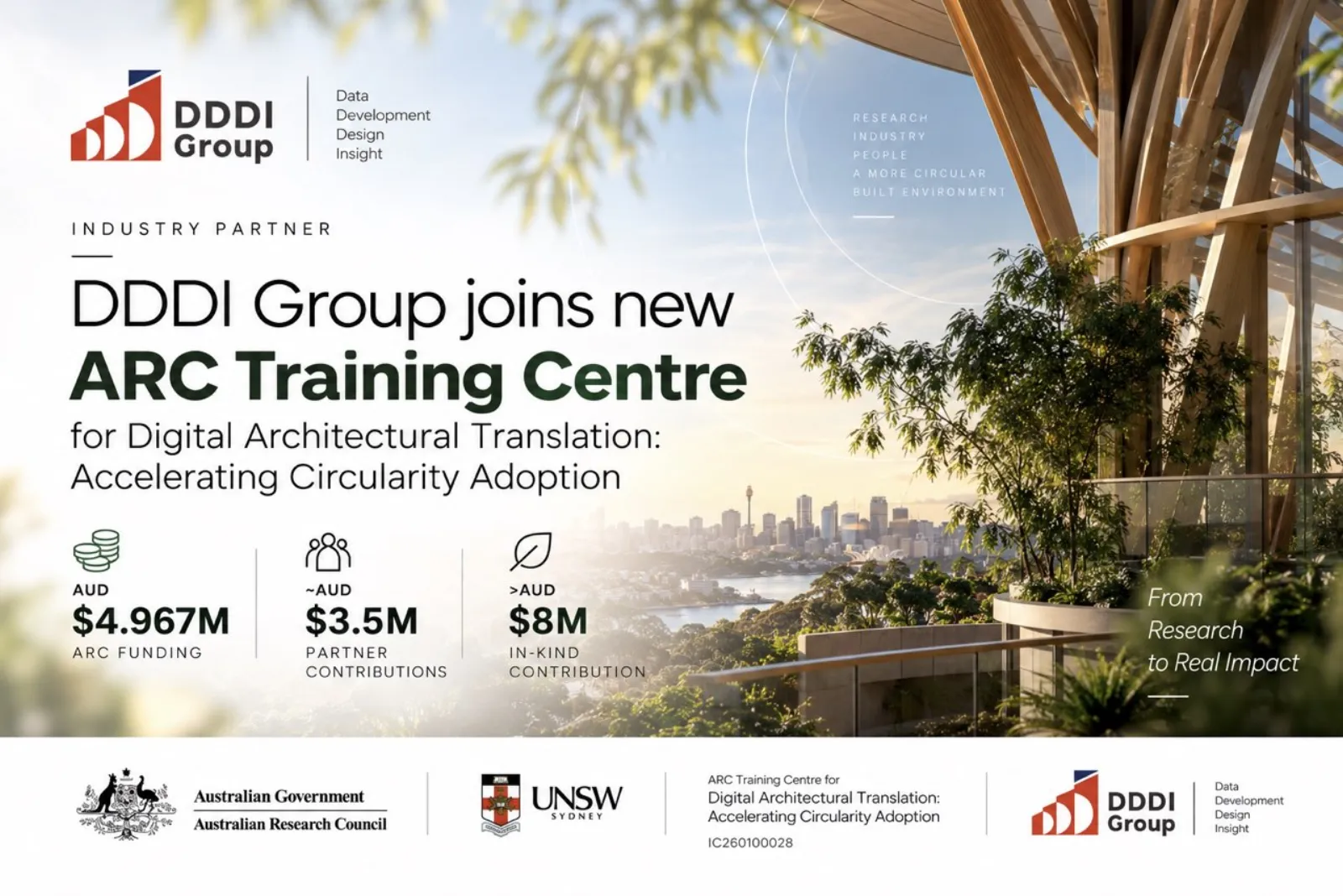
DDDI Group joins the ARC Training Centre for Digital Architectural Translation as an industry partner to accelerate circular practices in construction.
A DDDI Group paper on mobile augmented reality for small residential buildings has been accepted for presentation at AUBEA 2026.
The June quarter 2026 numbers, each one carrying its release name, its reference period and whether it is still preliminary, because ABS construction data is published in waves and the first wave is superseded.
Every Australian comparison page on this keyword is written by a vendor selling the alternative. This one is organised by why you are actually leaving, and it corrects two claims about Buildxact that are widely repeated and wrong.
Most scheduling tools on the Australian search results are built for $100M capital programmes, and most free Gantt templates cannot recalculate a dependency. Here is what a builder's programme actually has to do.
Most tools capture the hours. Far fewer decide what those hours were worth, and fewer still put the same figure against the job they were worked on. Here is the whole chain, and where it breaks.
The Australian search results for contractor management software are all principal-side platforms. Here is the lifecycle they run, the WHS duties behind it, and what each one charges.
Two profit percentages, one project. Why the denominator changes the number, how to convert between them, and why the GST margin scheme is a different thing entirely.
How to stress-test a development feasibility: run sale price, construction cost, interest rate and programme scenarios one at a time, then combined, and read what they do to profit, margin, residual land value and cash flow.
A developer-side feasibility model and a lender's valuation answer different questions, use different dates and rest on different evidence. Here is what changes between them, and what to do when the bank's number comes in low.
The Australian search results for job management software are nearly all trade and field-service apps. Here is what they do well, what they leave out, and how to tell which category your business actually needs.
The dollar figure every Australian comparison page quotes for Procore is a competitor's estimate, not a published price. This page sorts the alternatives by why you are leaving, says who should stay, and names the ones that are not Procore competitors at all.
A line-by-line development cost breakdown for a feasibility: what each category covers, who supplies the number, when the cash actually leaves, and what most spreadsheets leave out.
A buyer's comparison of Australian property development feasibility software grouped by what the tool actually does: early site and planning screening, financial appraisal and residual land value, and complex staged cash-flow models, with dated first-party pricing and the limits stated plainly.
A free, working development feasibility workbook with six sheets, 51 cost line items and live Excel formulas: what every field is for, how to replace the invented example numbers with real evidence, and what the file cannot do.
A practitioner's method for running a property development feasibility in Australia: establish the planning envelope, build a reconciled cost and revenue model, stress it, and know what a report must contain to be worth reading.
A developer-side guide to the maximum price a development site can support: the residual land value formula, a reconciled worked example, and why the simple subtraction is only the starting point.
South Australia's assessment clocks are pathway-specific, measured in business days, and can be paused once for further information. Here is how to read the statutory timeframes, why elapsed time runs longer, and how to price the gap into a development feasibility.
How product type changes the numbers on a small infill site: dwelling count and mix, layered comparables, the fixed-versus-per-dwelling cost split, title structure, services and earthworks, and a reconciled two-dwelling versus three-dwelling comparison.
The search results for construction apps are written for a market with ubiquitous coverage and American paperwork. Here is what survives an Australian site.
A head-to-head purchase comparison on the axes that decide it for a builder: where job costing lives and which tier carries it, how payroll headcount changes the bill, retention and progress claims, the app ecosystem, TPAR, offline behaviour, and what switching costs.
The ranked shortlist for Australian builders, with the published prices, the licence model behind each one, the segment picks and the tools that publish no price at all.
The enterprise controls market sorted by capability rather than by vendor, what EIA-748 compliance actually means, why almost none of it is priced publicly, and the right-sized stack for an Australian builder doing $2M-$50M a year.
There is no single best estimating tool, so this page refuses to pretend there is. Five builder profiles, each with a named pick, a runner-up and the vendor's own published AUD price checked October 2026.
The six different things vendors mean by free, which permanent tiers and trials actually exist in Australia today, what each one withholds, and the point at which free stops working.
A developer's building becomes an income asset the day it is handed over, and that asset has to be administered. Here is what a lease record holds, what breaks without software, and which Australian tools are built for whom.
Budgets, commitments and forecast to complete: the four numbers a construction job needs, why committed cost moves before the invoice does, and which Australian tools hold them.
How on-screen takeoff actually works: calibrating a scanned or rescaled sheet, the measurement primitives that cover residential work, what PDF, DWG and IFC each give you, and an honest reading of AI takeoff claims.
The anatomy of a progress claim line by line, the state deadlines that decide whether you get paid, how retention actually releases, and which Australian tools serve the head contractor's assessment versus the claim going out.
The Australian market sells five different safety products under one name. Here is what the WHS laws actually require, what makes a SWMS defensible, and what each platform charges.
What has to be in an Australian building quote, how allowances protect margin, what caps a deposit, and how to make trade quotes comparable enough to choose between them.
What a builder's ledger has to handle that a standard one does not, which Xero and MYOB plans actually include job tracking, and how GST applies to progress claims and retention under the ATO's rules.
Project controls is the measuring, forecasting and reporting function on a build, not the decision-making one. What the discipline contains, how CPI and SPI work, and the scaled-down version for a builder running five to thirty homes a year.
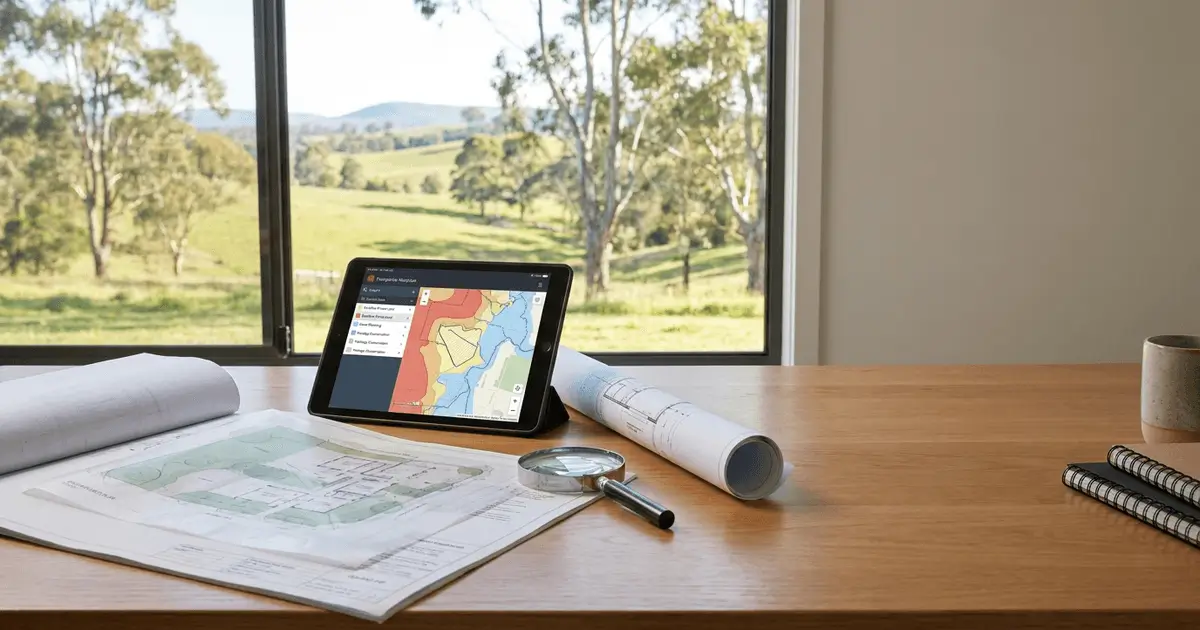
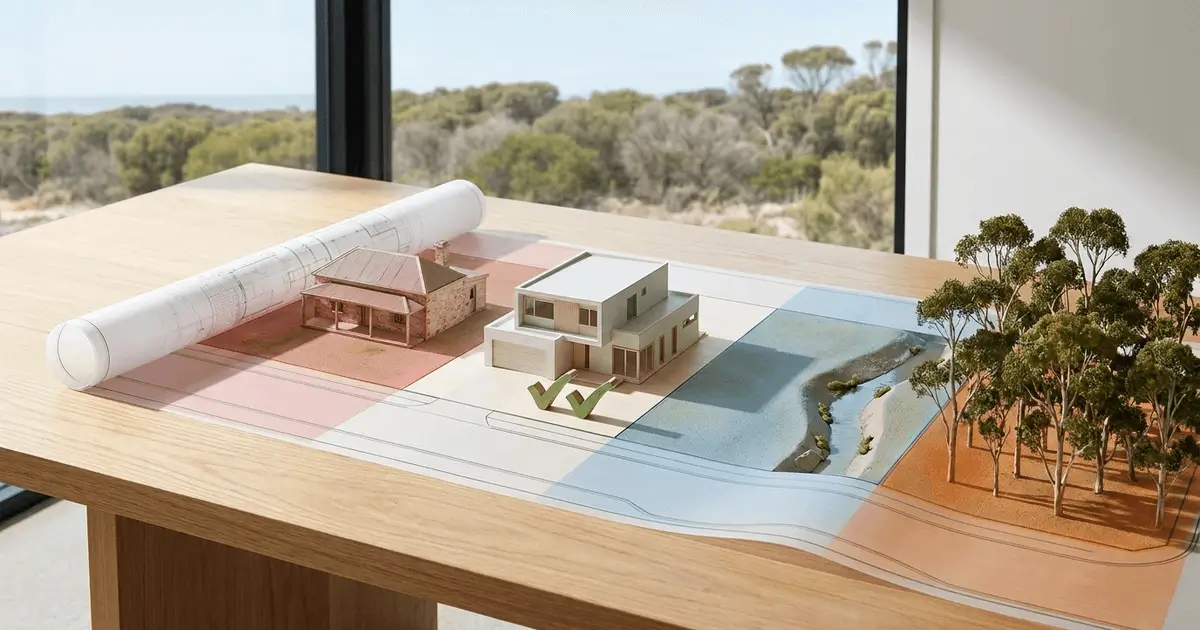
How to read the hazard overlays that decide your construction costs and whether your project can use the fast-track complying development pathway.
A step-by-step screening workflow for builders and certifiers to test land eligibility under the Codes SEPP before commissioning drawings — and to know when the project must go to council as a DA.
A practical feasibility playbook for builders and property developers to verify zoning, minimum frontage, stormwater gravity, and Torrens subdivision potential.
A practical guide for property buyers, builders, and developers to navigate NSW zoning maps, built-form controls, environmental overlays, and state planning tools.
How to convert the FSR, building height and minimum lot size figures on the NSW Planning Portal into a real floor area budget, a buildable envelope, and a subdivision answer.
A step-by-step guide for property buyers, builders, and developers to identify land zoning, decode Standard Instrument zone codes, and navigate LEP Land Use Tables.
A step-by-step guide for Adelaide builders, buyers, and developers to navigate the SA Property and Planning Atlas, extract Planning and Design Code rules, and inspect overlays.
A developer and builder guide to the 800 metre walking catchments, the 22 metre mid-rise height for R3 and R4, floor space ratios, dual occupancy standards and the land exclusions in Chapter 6 of the Housing SEPP.
A strategic interstate comparison for commercial and residential developers analyzing statutory architecture, fast-track pathways, and planning risk across Sydney and Adelaide.
A national guide for Australian builders, developers, and property investors navigating state digital planning portals, zoning systems, and property reports.
A buyer's and developer's guide to the difference between the free NSW Planning Portal property report and a statutory section 10.7 planning certificate — what each proves, what each costs, and when the law requires one.
A practical guide for property buyers, builders, and developers to understand cadastral data, legal title boundaries, survey plans, and DCDB accuracy limits.
A buyer's guide for Australian builders: what estimating software actually does, how it differs from takeoff and quoting, where cost databases and supplier price files come from, and what each option costs in AUD.
What a construction ERP actually does that accounting software cannot, the signals that say you have outgrown the ledger, the Australian vendors and their real pricing basis, and what implementation costs.
A practical guide for builders and developers evaluating combined hydraulic packages across SA Water, OTR compliance, and council stormwater regulations.
A category map for Australian builders: the five jobs software has to do, how the modules fit together, what AUD pricing models actually reward, and what to buy first.
A practical guide for Adelaide bricklayers, blocklayers, and masonry gangs looking to secure continuous builder pipelines without paying for leads.
A practical guide for builders and developers benchmarking interior finishes, surface preparation, and trade sequencing under Australian Standards.
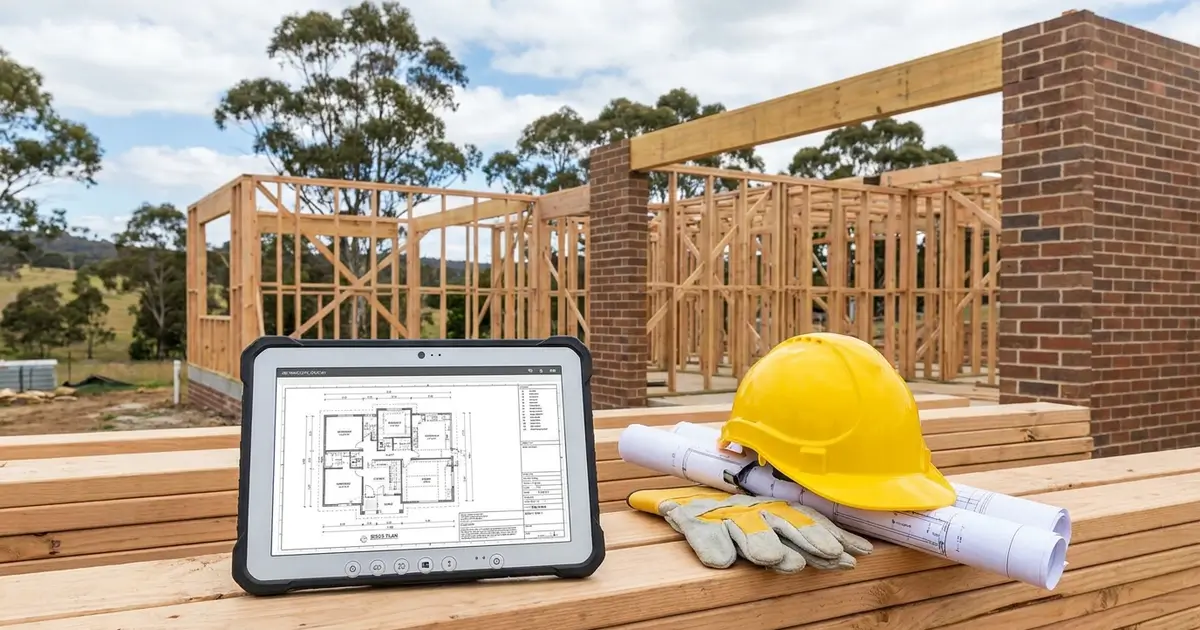
How head contractors, project managers, and commercial tenants coordinate multi-trade procurement from a single set of plans.
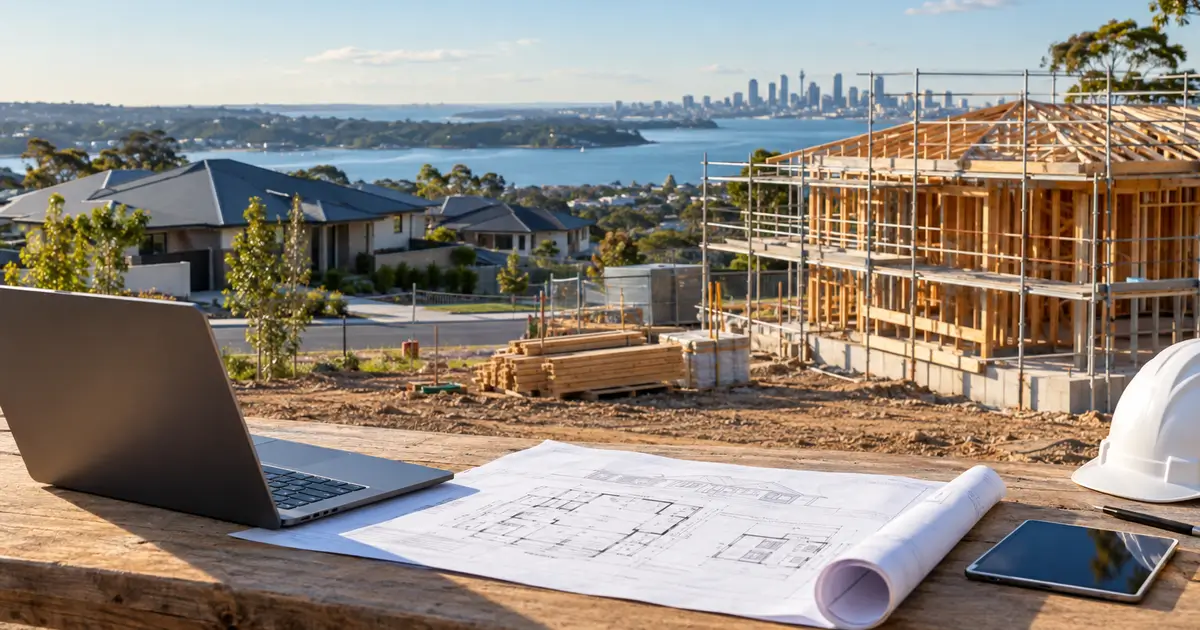
A four-step recovery method for Adelaide builders facing trade walk-offs, subcontractor insolvency and critical path delays.
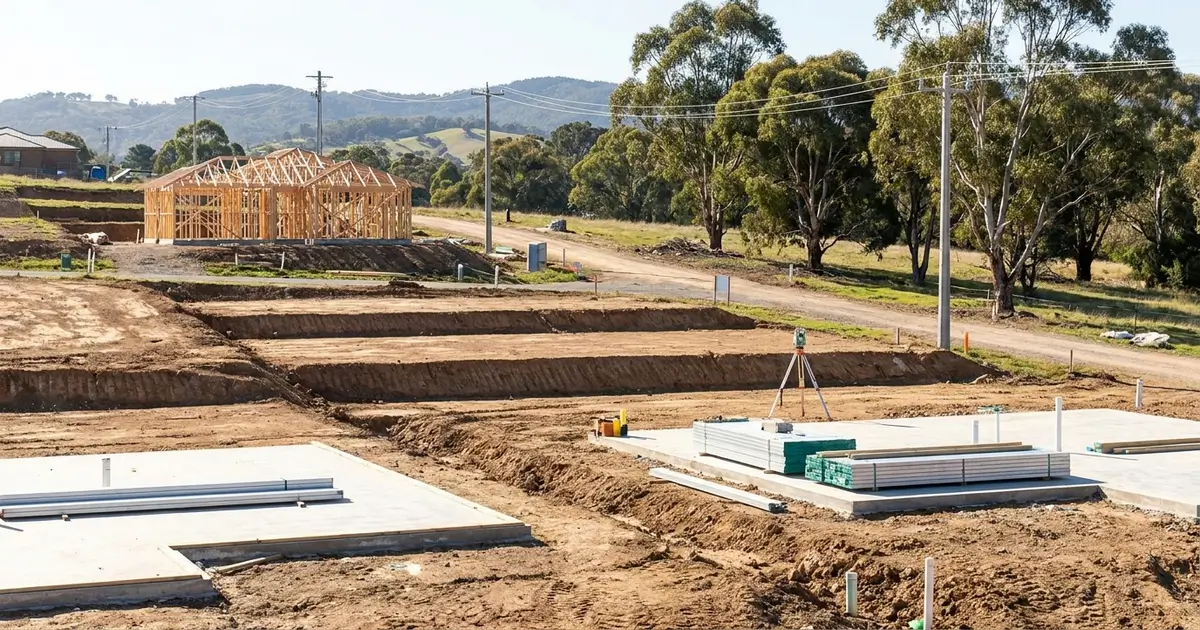
How property developers and head contractors verify trade licences, insurance and payment duties on South Australian projects, and what the law actually requires.

Turn architectural CAD drawings into side-by-side trade quotes without manual sheet slicing, takeoff errors, or endless subcontractor chasing.

A practical bid-levelling checklist for comparing custom joinery, built-in wardrobes, and post-silica-ban benchtop quotes across Greater Adelaide projects.
How independent Australian home builders overcome material scale penalties, eliminate trade subcontractor friction, and protect gross margins through modern builder enablement.
A practitioner's bid-levelling checklist to eliminate party-wall scope gaps, coordinate dual utility connections, and streamline multi-trade tenders across Greater Adelaide.
How Australian builders compare subcontractor quotes
A practical bid-levelling framework to eliminate structural scope gaps, coordinate service upgrades, and synchronise multi-trade renovation quotes across Greater Adelaide.
A practitioner's bid-levelling framework to eliminate party-wall scope gaps, coordinate shared utility infrastructure, and synchronise multi-unit tenders across Greater Adelaide.
Funding, eligibility and downstream construction opportunities for remote aviation infrastructure
Supporting the development, demonstration and pre-commercial deployment of renewable-energy technologies and infrastructure across Australia.
A practitioner's bid-levelling framework to resolve foundation movement joints, roof tie-in weathering, and multi-trade scope gaps on Adelaide residential extensions.
A practical framework for vetting multi-trade quotes, preventing strata variation traps, and achieving true apples-to-apples bid levelling on Adelaide multi-unit refurbishments.
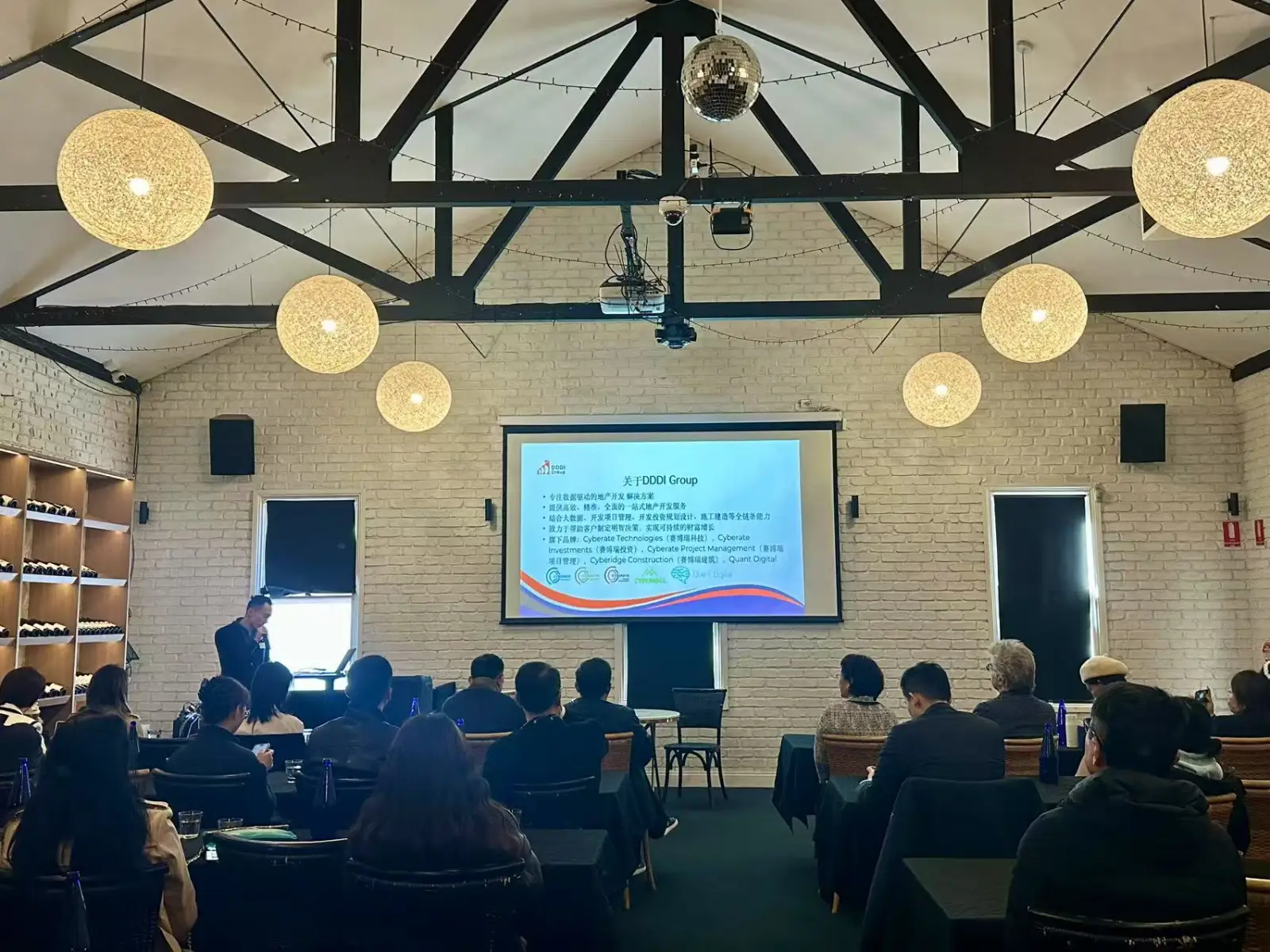
A closed-door Adelaide forum on policy, legal risk, finance and innovation in South Australian property development.
DDDI Group's Percy Zhang will present at AUBEA 2025 on data mining South Australia's planning approval processes.
South Australia Job-Seeking Seminar
A house and land package bundles land with a pre-approved home, and buyers should understand the two contracts, loans, extras and timeline.
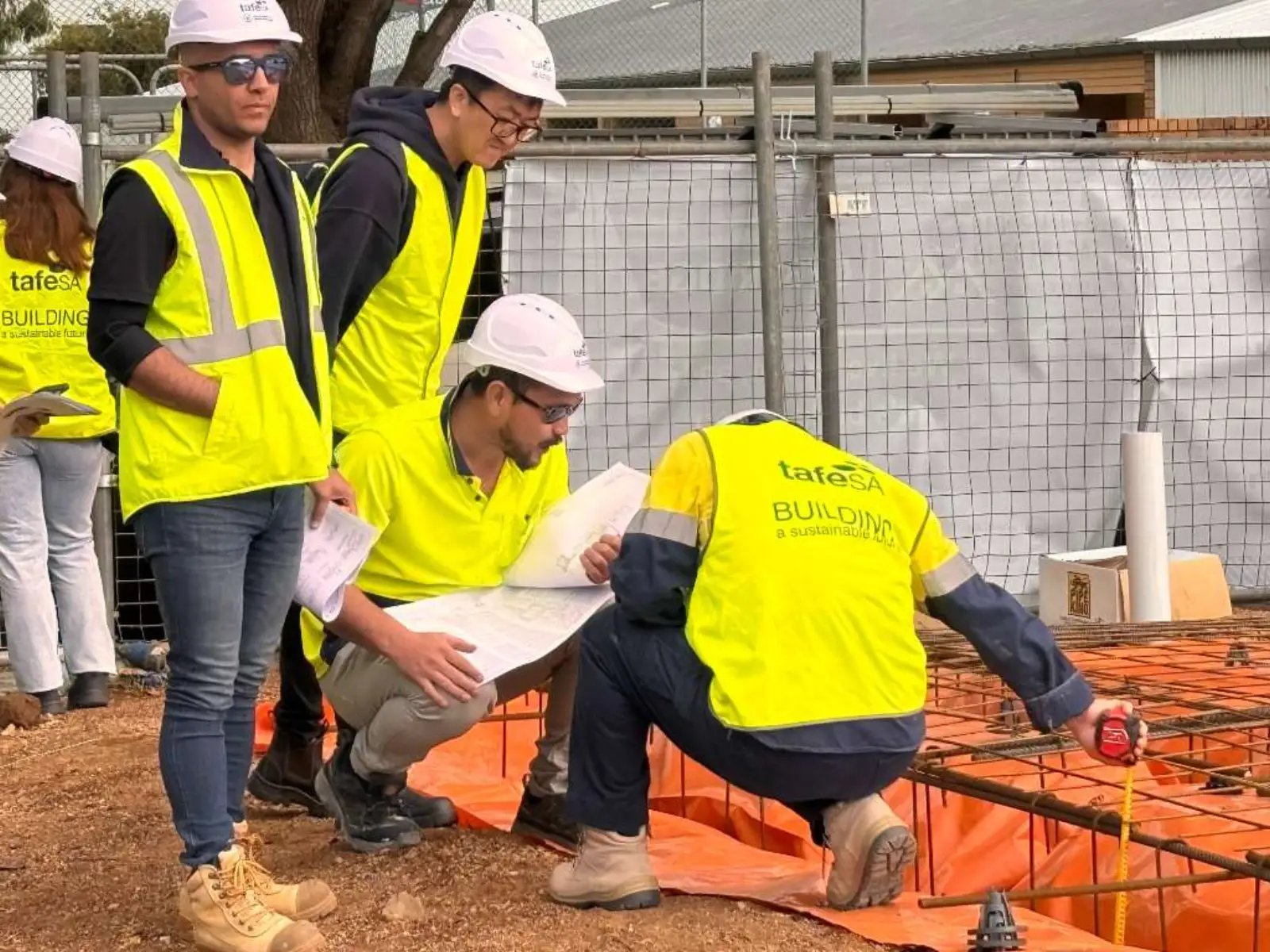
TAFE SA students and lecturers visited a Keswick construction site in the footing stage, jointly managed by Cyberidge Construction and Cyberate Project Management.
DDDI Group relaunched its three-vehicle Tesla fleet, pairing zero-emission travel with a data-driven approach to sustainable development.
Large eucalyptus trees in South Australia may be regulated or significant, and clearing or pruning them without approval can delay a development.
Cyberate Investments and Cyberate Technologies became Gold Sponsors of Wilderness School's Mobula-98 team in the SUBS in Schools Technology Challenge.